
How to Check Criminal History in Hillsborough County
No single query produces a complete Hillsborough County criminal history. HOVER holds local circuit and county court cases. HCSO Arrest Inquiry supplies booking and custody context. The Florida Department of Law Enforcement, or FDLE, keeps the statewide fingerprint-linked repository and offers public checks. Begin with a full legal name, spelling variants, date of birth when lawfully available, and any case, booking, or citation number.
- Search HOVER by party name, case number, Uniform Case Number, citation, date and case type, or hearing date.
- Confirm the result with filed date, court type, status, and public identifiers. Do not assume a common-name match.
- Open the case to read each filed charge, event, disposition, and sentence. Request a paper image if the docket lacks one.
- Check HCSO Arrest Inquiry for booking and release facts, then request the narrative from the arresting agency.
- Use an FDLE statewide check or fingerprint Personal Review when county-only sources cannot answer the question.
Use the result for its proper scope. A docket is the best local prosecution trail, not a statewide rap sheet. A booking proves intake, not guilt. An FDLE name result covers Florida but is not fingerprint confirmation.
Choose the Hillsborough Criminal Record
The most useful first choice depends on the event. These official systems overlap, yet none replaces the others. A charge can change between arrest and filing, and a local docket may update before FDLE receives the final disposition.
| Question | Official channel | Scope |
|---|---|---|
| What was filed and decided? | Hillsborough Clerk HOVER | County and circuit court cases |
| Was there a county booking? | HCSO Arrest Inquiry | Adult electronic bookings since 1995 |
| Is a county warrant listed? | HCSO Warrant Inquiry plus court confirmation | Public warrant data, subject to delay and limits |
| What does Florida report? | FDLE Criminal History Record Check | Florida repository records |
| Is there state custody or supervision? | FDC Offender Search | Florida prison and felony supervision |
Follow the chain when dates or charges disagree: arresting agency report › HCSO booking › State Attorney filing › Clerk disposition › FDLE update.
Official Florida Background Checks
FDLE's official Florida check options include an instant public name search, a staff-processed search, and fingerprint-based Personal Review. The instant result costs $24 plus a $1 card-processing fee and is noncertified. Staff searches cost $24 and can be certified. A name result relies on demographics, so aliases and similar names can cause uncertainty.
For one's own identity-confirmed record, FDLE Personal Review uses a completed fingerprint card and has no FDLE review fee, though a private print provider may charge for capture. An ORI-based Livescan submission needs the valid ORI supplied by the authorized receiving agency. The ORI controls the recipient and purpose.
The official instant interface shows the state-level search route.
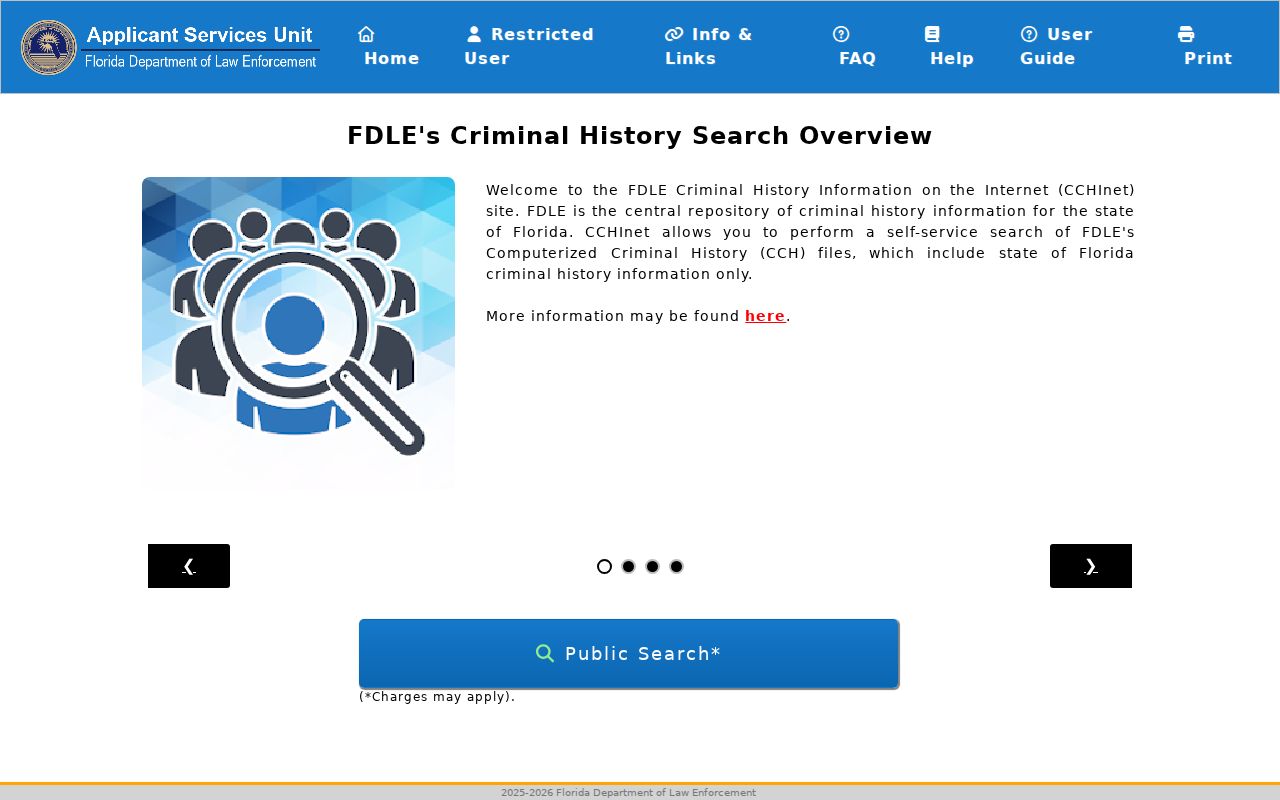
This state source is broader than Hillsborough HOVER, but it does not provide the full local pleading file or police narrative.
| FDLE product | Basis | Official price |
|---|---|---|
| Instant Search | Name and demographics, Florida only | $24 plus $1 card fee |
| Staff search | Name and demographics, certified or noncertified | $24 |
| Personal Review | Fingerprints for self-review | FDLE review free; capture may cost |
| HOVER | Name or case identifier, Hillsborough cases | Search and public noncertified images free |
Hillsborough Criminal Records Courthouse
The George E. Edgecomb Courthouse at 800 E. Twiggs Street in Tampa is the county's core criminal courthouse. The Clerk's downtown service location handles court records, while HOVER often removes the need for a trip. Circuit Court hears felonies. County Court hears misdemeanors and county ordinance criminal cases. Clerk questions go to 813-276-8100.
The building is named for Hillsborough County's first Black county court judge. That local milestone is part of the court's public identity. Visitors face security screening, and court orders or the presiding judge control device and recording rules. The Thirteenth Judicial Circuit handles ADA accommodation and interpreter needs. Eastern-county residents can also contact the Plant City Courthouse at 301 N. Michigan Avenue, but should verify current criminal services before travel.
Hillsborough Clerk
George E. Edgecomb Courthouse
800 E. Twiggs St.
Tampa, FL 33602
813-276-8100
HCSO Records
Operations Center
2008 E. 8th Ave.
Tampa, FL 33605
813-247-8210
Plant City Clerk
301 N. Michigan Ave.
Plant City, FL 33563
813-276-8100
Types of Criminal Records
Each Hillsborough County record begins at a different point. Police document the event. HCSO creates a booking when the person enters county custody. The State Attorney chooses charges. The Clerk records the court case, and FDLE links fingerprint-supported arrest cycles to reported outcomes.
- Incident and arrest report: the arresting agency's narrative, probable cause, witnesses, property, and officer actions.
- Booking record: HCSO intake number, time, allegations, bond, holds, custody, and release data.
- Court file: filed charges, pleadings, hearings, pleas, orders, disposition, sentence, and financial entries.
- Repository history: FDLE's statewide fingerprint-linked arrest cycles and reported outcomes.
- Warrant, custody, and supervision records: court, HCSO, FDC, Commission, or federal entries based on jurisdiction.
- Registry record: the FDLE sexual offender or predator listing, which is not a complete criminal history.
Juvenile, sealed, expunged, victim-related, and active-investigation material can be confidential or redacted. A missing portal result is not a clearance certificate.
Police reports also remain agency by agency. HCSO holds its reports for unincorporated Hillsborough County. Tampa Police, Plant City Police, and Temple Terrace Police retain the reports their officers create. Florida Highway Patrol keeps its traffic investigations, while Tampa International Airport Police and campus agencies control their own files. A focused request gives the incident number, date and time, exact place, report type, and preferred format. For 911 audio or body-camera footage, narrow the time and officer or unit because review and redaction can lead to a special-service estimate.
Hillsborough Booking for 27 Agencies
Orient Road Jail at 1201 N. Orient Road is the primary receiving and central-booking facility for more than 27 agencies. This explains why a Tampa Police, airport, campus, or state arrest may appear in HCSO Arrest Inquiry. The sheriff describes a 4,947-bed detention system. Falkenburg Road Jail, at 520 N. Falkenburg Road, is a 3,300-rated-bed direct-supervision complex.
Arrest Inquiry is free, uses reCAPTCHA, updates every 30 minutes, and covers electronic adult entries since January 1, 1995. During a booking's first 24 hours, general listings may omit the entry even though an exact first-and-last-name search can find it. Ordinary public entries remain for 90 days after release. Older records move to the HCSO public-record route.
The official Hillsborough County Sheriff's Office source identifies the agency that runs booking and detention.
The sheriff's site routes custody and public-record questions, while the Clerk remains responsible for the filed case outcome.
What a Hillsborough County Criminal Record Shows
A Florida rap sheet is built around identity and fingerprint-linked arrest cycles. A Hillsborough court file is organized around one prosecution. A booking detail is organized around one jail intake. The fields below may therefore appear in different combinations, and not every public view contains the same data.
| Name and Identifiers | Legal name, aliases, birth data, state ID, booking number, case number, and transaction identifiers when reported. |
|---|---|
| Arrest and Booking | Date, agency, intake charge, bond, holds, custody, and release details. |
| Charges and Statutes | Original allegations, prosecutor-filed counts, charge degree, and Florida statute references. |
| Disposition | Dismissal, nolle prosequi, acquittal, plea, adjudication, withhold, or other entered result. |
| Sentence | Confinement, probation, community control, restitution, fines, and other court terms. |
| Custody or Supervision | County detention, state prison, probation, community control, or limited parole information. |
The full probable-cause report, victim evidence, every pleading, and a courtroom transcript do not normally appear on a rap sheet. Request each from its proper custodian if public.
Hillsborough Booking Charges Can Change
An officer records the alleged offense at arrest. HCSO carries that information into booking. The State Attorney then reviews the referral and independently decides whether and what to file. A complaint, information, or indictment starts the court case. One count can be dismissed while another ends in a plea. The Clerk later reports dispositions to FDLE.
- Disposition
- The outcome of a charge or case.
- Nolle prosequi
- The prosecutor's formal decision not to continue a charge.
- Withhold of adjudication
- A sentence without a formal adjudication of guilt; it is not a dismissal.
- Capias
- A court command to take a person into custody, often after a missed requirement.
- Community control
- Intensive, restrictive Florida community supervision.
The State Attorney for the Thirteenth Judicial Circuit makes charging decisions but does not keep the Clerk's public docket.
The official State Attorney source shows the county prosecution office and its current functions.
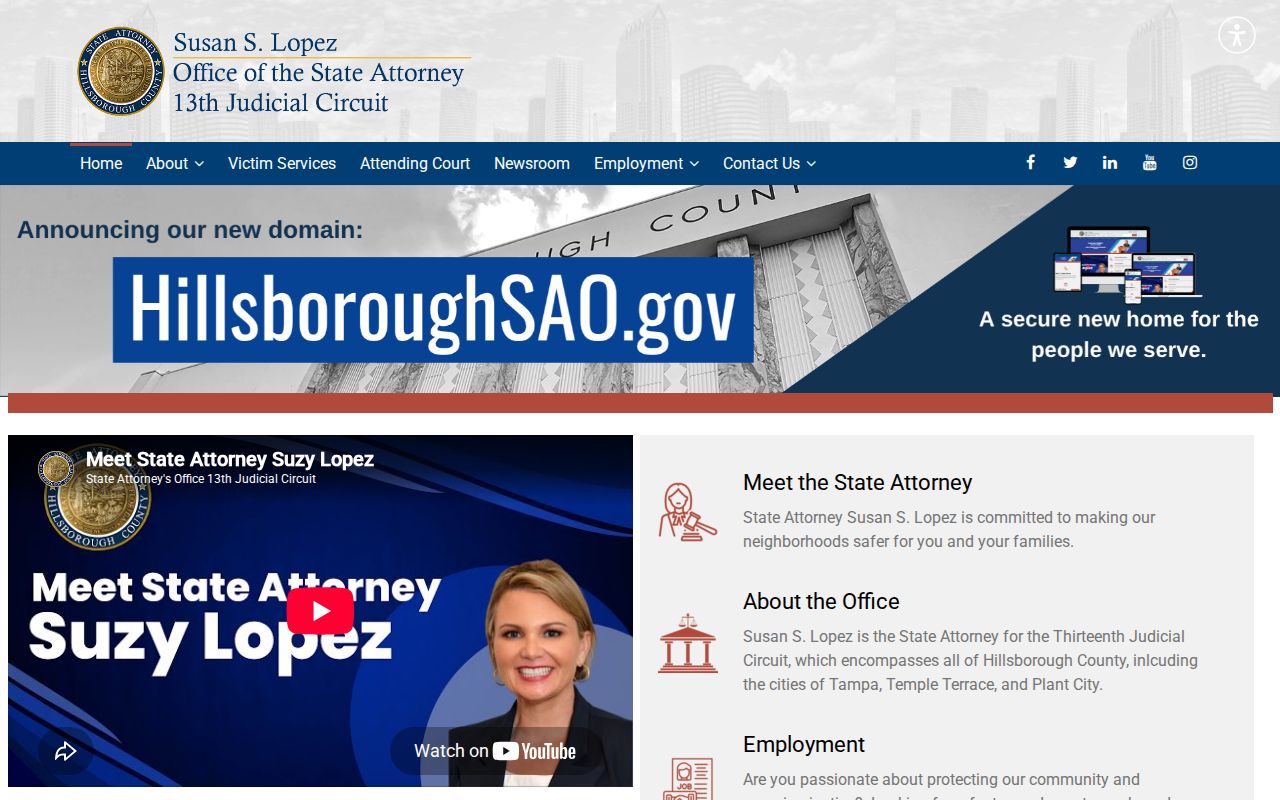
Use HOVER for the filed charges and final case result, not a prosecutor's office page or the original booking label.
Public Access Laws
Florida's access rules begin with the office that created or maintains the record. The Clerk handles court files, HCSO handles sheriff and jail files, each city police department retains its reports, FDLE handles repository products, and FDC handles corrections records. Portals publish only the subset approved for online release.
Key Florida authorities:
Section 119.07 requires prompt, good-faith access to nonexempt public records and release after lawful redaction.
Section 943.053 governs FDLE criminal-history dissemination and fees.
Section 943.056 provides subject review and challenge rights.
Court Rule 2.420 sets judicial-record access and confidentiality procedures.
Florida Constitution article I, section 24 establishes access subject to lawful exemptions.
Active investigative information, confidential victim or juvenile material, protected identifiers, and sealed or expunged records may be withheld. A custodian asserting an exemption must cite its basis and release the nonexempt part.
Hillsborough Warrant Checks Need Confirmation
HCSO Warrant Inquiry is the public county starting point, but a negative result is not legal clearance. Entries can lag court action. Sealed and juvenile warrants are not ordinary public results. Search HOVER for the case and confirm status with HCSO or the Clerk at 813-276-8100 before relying on a web result.
The official HCSO Warrant Inquiry supplies name and case-related search fields.
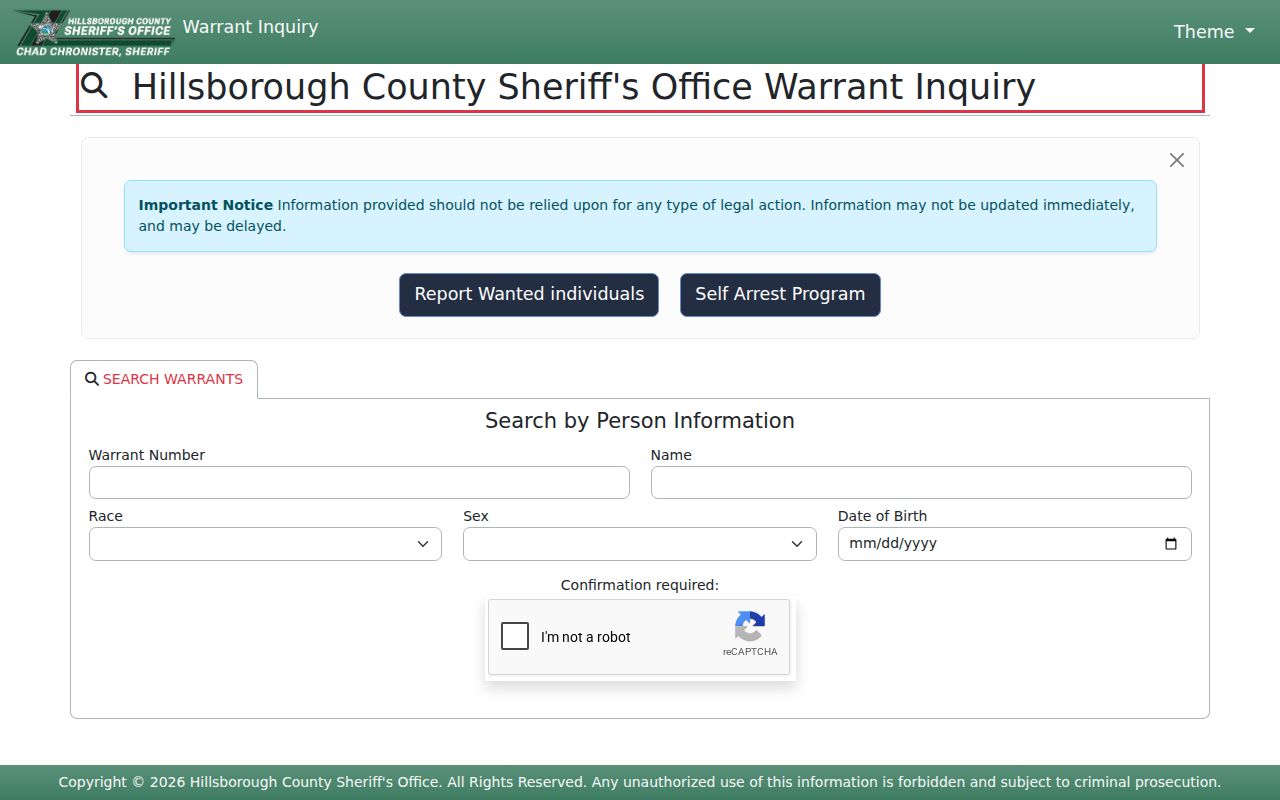
This tool assists with research but cannot guarantee that every warrant is present or that a recent recall has finished processing.
A person checking their own possible warrant should obtain legal advice before deciding whether and how to appear. Resolution occurs in the issuing case through a recall or quash order, appearance, bond, or payment only if the judge authorizes it. Keep the written court order after a warrant is cleared.
Different warrant terms point to different court events. An arrest warrant follows a probable-cause finding. A bench warrant often follows failure to appear. A capias orders custody after a court event or unmet condition. A search warrant authorizes a search of a place or item and is not a public wanted-person list while sealed or active. FDLE Wanted Persons Search adds a statewide assistance tool, but it also cannot promise that every Florida warrant appears.
Sealed, Expunged & Restricted
Florida separates court-ordered sealing from expunction. A sealed record remains preserved but confidential. Expunction removes or destroys more covered agency records, subject to limited notation and statutory access. Neither remedy begins with deleting a web result. A person first applies to FDLE for a Certificate of Eligibility, obtains the required certified Hillsborough disposition, and then files the petition and related papers in the correct court.
Eligibility depends on the disposition, prior relief, adjudication history, offense type, and pending supervision. A dismissal alone does not guarantee relief. Automatic sealing under section 943.0595 is separate. After an order, the Clerk and FDLE notify covered agencies, but copies already collected elsewhere may require direct follow-up. Juvenile and other protected records follow their own rules.
Note: An FDLE Certificate of Eligibility is a filing prerequisite, not an order that seals or expunges a Hillsborough record.
Hillsborough Custody After County Release
HCSO answers county jail questions. The Florida Department of Corrections, or FDC, covers sentenced state prisoners and state-run felony probation or community control. The Florida Commission on Offender Review handles parole and other designated release decisions, with supervision administered by FDC Community Corrections. Modern Florida parole eligibility depends heavily on offense date and law.
The Florida Commission on Offender Review is the official parole-authority source.
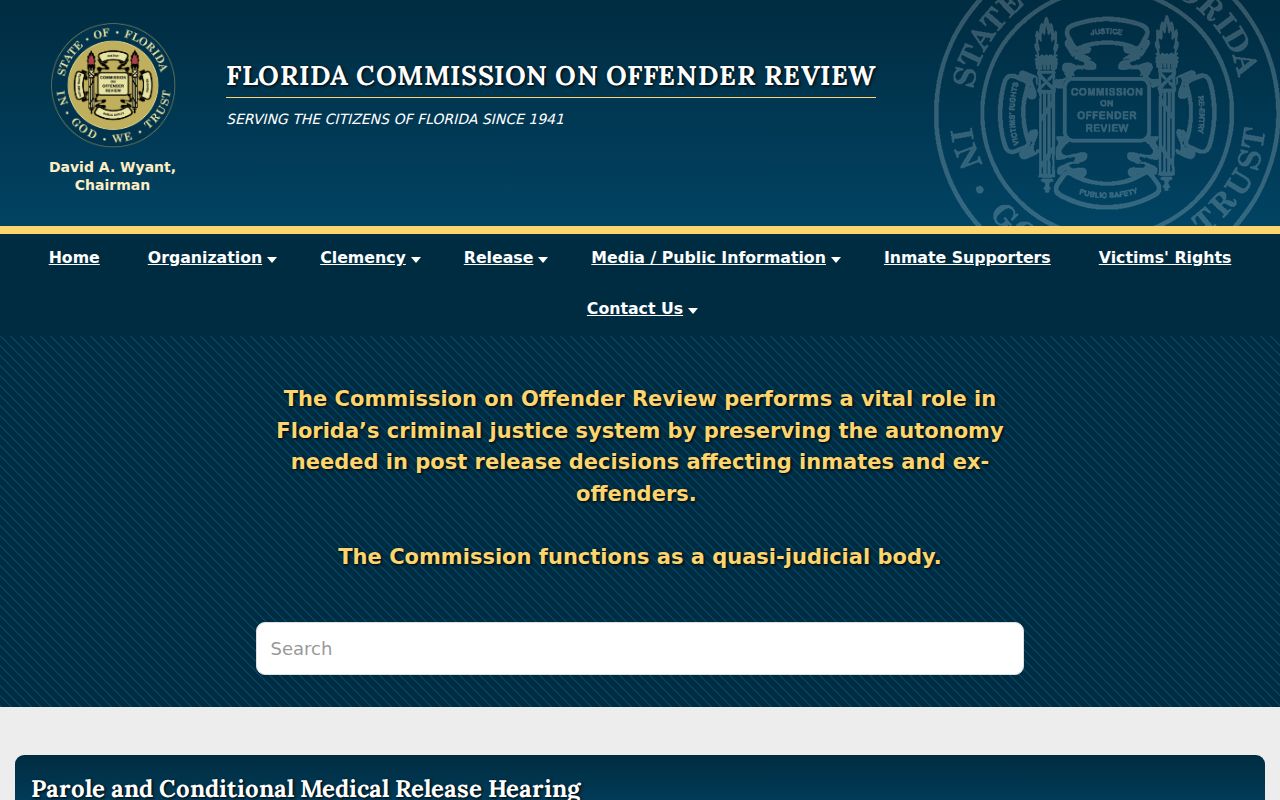
This statewide channel complements the FDC Offender Search and the Hillsborough court sentence. Federal custody instead uses the Bureau of Prisons locator, and federal dockets use PACER.
Probation and parole should not be treated as synonyms. A Hillsborough judge orders probation or community control as part of a sentence, and the court docket records that judgment. FDC Community Corrections supervises felony probation and community control through circuit offices. Parole is conditional release under Commission authority and applies only where Florida law makes the person eligible. Internal supervision notes may remain restricted even when a court sentence or selected FDC status is public.
The FDLE Sexual Offenders and Predators Registry is another separate state system. It supports name, location, neighborhood, school, institution, vehicle, vessel, and internet-identifier searches, but FDLE warns that a registry listing is not the person's complete Florida criminal history. Use the named county clerk for an underlying conviction and the arresting agency for the arrest report. Registry data supports personal and community safety; harassment or misuse is prohibited.
Hillsborough Defense Office Record Role
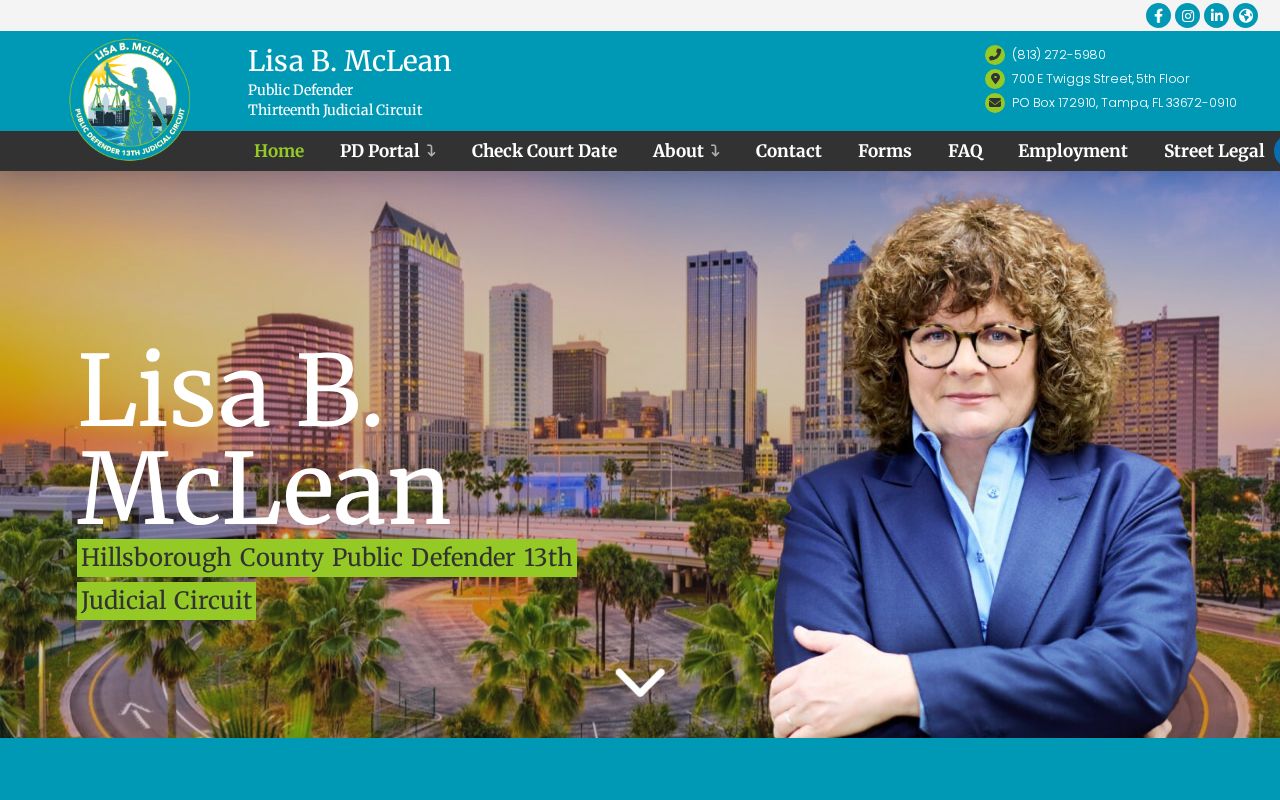
The Public Defender for the Thirteenth Judicial Circuit represents eligible court-appointed defendants. Its headquarters is at 700 E. Twiggs Street, Fifth Floor, Tampa, and its main number is 813-277-1200. It is part of the county justice system, but it is not a public criminal-history database or the custodian for HOVER.
The official Hillsborough Public Defender source identifies the defense office.
Direct public docket and copy requests to the Clerk. A lawyer's case file, police narrative, booking detail, and Clerk docket are separate records with distinct access rules.
The State Attorney at 419 N. Pierce Street, 813-272-5400, has the opposite case role: it reviews referrals and decides what to charge. Its public data dashboard explains prosecution outcomes and diversion terms, yet the office still does not replace HOVER. The Clerk's entry is the place to verify a filed disposition. Comparing a dashboard trend with one person's record would blur two different forms of information.
Criminal Records by City in Hillsborough County
Hillsborough County has exactly three incorporated cities: Tampa, Plant City, and Temple Terrace. Their police departments keep the reports they create, while HCSO runs county detention. Florida abolished traditional municipal criminal courts, so city arrests ordinarily flow to Hillsborough County Court or the Thirteenth Judicial Circuit based on the charge. Each city route adds local police access before the county and state layers.
Tampa Criminal History
Tampa Police records, HCSO booking, and Hillsborough HOVER court routing.
Plant City Criminal History
Plant City Police records plus the local Clerk branch at 301 N. Michigan Avenue.
Temple Terrace Criminal History
Temple Terrace Police records at City Hall with county booking and court follow-through.
Large unincorporated communities such as Brandon, Riverview, Carrollwood, Valrico, Ruskin, and Apollo Beach rely primarily on HCSO for local law-enforcement records. All ordinary state criminal prosecutions still converge in the same county and circuit court system.